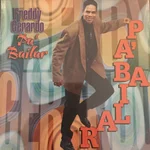
Pa' Bailar
1996 · album · 8 tracks
Freddy Gerardo Moreta was born at the Alejandro Cabral Hospital in San Juan de la Maguana, Dominican Republic. Son of Fidelina Moreta (a single mother of seven children, seamstress, and candy maker) and Teófilo Peña Rosario (a military officer), he grew up in the popular neighborhood of Mesopotamia.
His musical inclination began at a very young age (around 7 or 8 years old) after listening to a traditional típico group in his neighborhood. His first encounter with percussion was self-taught, improvising tamboras out of oil jugs and tin cans. Later on, neighbors such as Seneo and Juanito formally taught him how to play the tambora and güira.
He subsequently taught himself to play the guitar using one belonging to his neighbor Teodoro Roa Lagares. His innate talent was noticed by Professor Agustín Saldaña, who convinced his mother to enroll him in the School of Fine Arts and the Municipal Academy of San Juan de la Maguana. There, he learned clarinet under Master Plinio Félix, classical piano with Professor Doña Molina, and eventually played bass and lyre in the municipal band.
During his adolescence, he formed the group Agrupación Primavera with friends. Over time, this group evolved into Freddy Gerardo y su Orquesta, where he served as pianist, musical director, and backing vocalist. To help support his household financially, he worked from a young age as a shoeshine boy, candy vendor, and tailor's apprentice.
Career in Santo Domingo and Popular Orchestras
At around 19 or 20 years old, San Juan musician "Psycho Colón" recruited him to play piano at the Hotel Napolitano nightclub in Santo Domingo. Once settled in the capital, he actively integrated into the national merengue scene:
Richie Ricardo ("El Natural"): Joined as pianist and eventually became his musical director, bringing a signature piano style influenced by Andrés Mejías. With this orchestra, he made his first international tours to the United States.
Sergio Hernández: After leaving Richie Ricardo's group, he joined Sergio Hernández's orchestra.
Carlos Manuel El Zafiro: Served as pianist and musical director during the artist's final phase before relocating to the United States, touring Aruba, Curaçao, and New York.
Rubby Pérez: In 1993, he joined Rubby Pérez's orchestra as pianist upon recommendation from musicians Tati and Luis Rivera, remaining for about five years. During this period, he established himself as a highly sought-after pianist handling some of the most demanding repertoires in Dominican merengue.
Work as a Composer and Arranger
Parallel to his work as an instrumentalist, Freddy Gerardo developed a prolific career as a composer and arranger for internationally renowned orchestras:
Los Sabrosos del Merengue (Puerto Rico): Composed and arranged the hit «Colina» (the first major hit recorded by Joseph Fonseca with the group), as well as the holiday classic «Pagando el 71».
Rikarena: Composed and arranged the hit «Antonio Pérez».
Jossie Esteban y La Patrulla 15 / La Banda 2000 / Rokabanda: Wrote and arranged several tracks, including «El viejo» and «El grillo».
Commercial Success and "La Voz de Mantequilla"
In the late 1990s, almost by accident, Freddy Gerardo launched his own musical project as a frontman and lead singer. While recording guide vocals for his demo tapes, he jokingly referred to himself as "La Voz de Mantequilla" ("The Butter Voice").
Signed under the label Allegro Productions (led by Johnny Montaño, Manolo Ascona, and Papo Daniel Hernández), he introduced a festive and humorous style that revolutionized the merengue scene of the era:
«Dame del Pollito» (El Pollito): Inspired by the rhythms of the baton twirling groups (batón ballet) from his hometown, this track became a massive global radio and commercial hit. The song's impact was so significant that the British network BBC traveled to the Dominican Republic to film a report on him.
Other Hits: Popularized several catchphrases and comedic tracks such as «El Maco», «El Perro Chihuahua», «El Chivo», «La Pelota», and «La Chuleta».
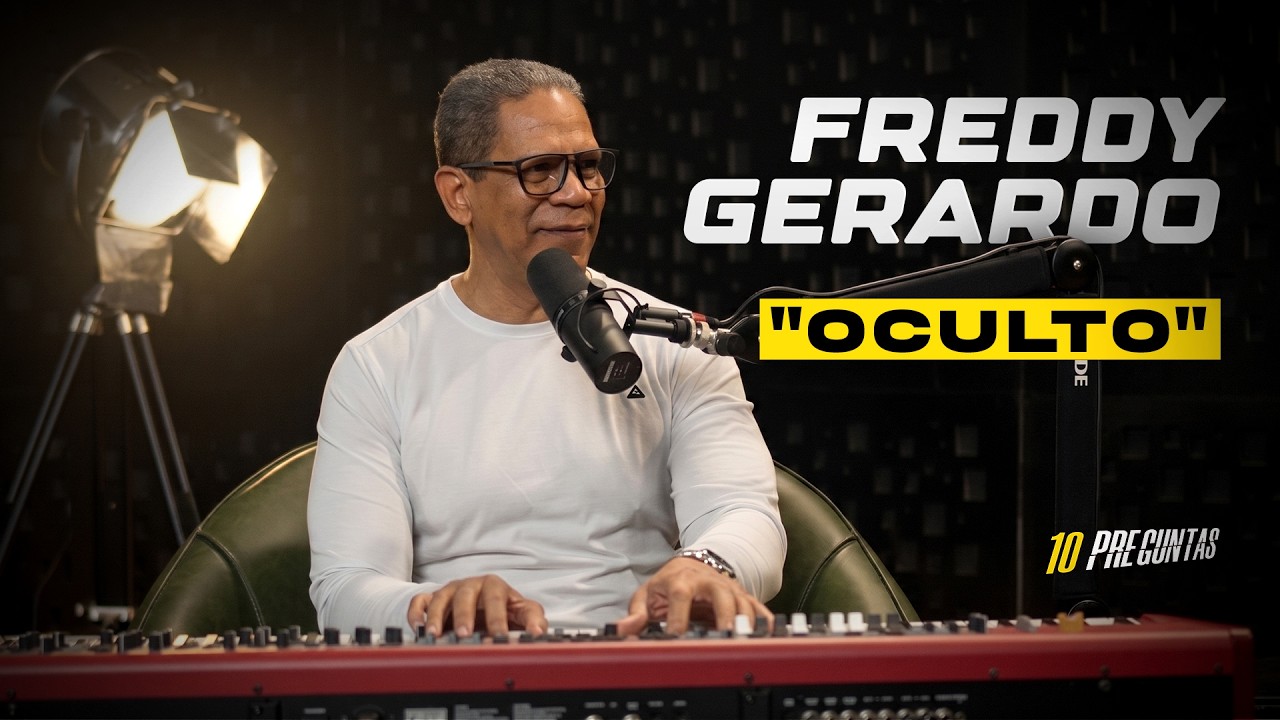
Interviews, conversations, and archival media connected to this artist.

August 15, 2026


September 21, 2024


September 16, 2024


September 19, 2022

September 19, 2022
1996 · album · 8 tracks
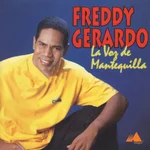
1997 · album · 10 tracks
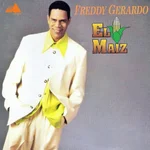
1998 · album · 9 tracks
2001 · album · 8 tracks
2017 · album · 8 tracks
1997 · single · 1 track

2017 · single · 1 track

2019 · single · 1 track
2019 · single · 1 track
2020 · single · 1 track
2020 · single · 1 track
2009 · compilation · 16 tracks