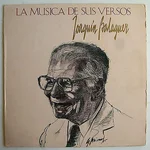
Venus negra
1986 · single · 1 track
Rafael Colón, the stage name of Rafael Saint Hilaire Colón, was a Dominican singer, composer, and guitarist known as «La Espiga de Ébano». He was born on May 18, 1918, in Santiago de los Caballeros and died on June 7, 1991, in Santo Domingo. His career encompassed bolero, merengue, and troubadour song, performing both with large orchestras and with his guitar.
From vocal trios to orchestras
He began making music as a child in the trio «Tapacán», alongside his brother Federico Colón and Licinio Valerio, appearing on Santiago radio while also learning the shoemaker’s trade. He later joined «Trío Santiago». In the late 1930s he worked as a drummer and singer with «Estrellas Cibaeñas» and «Orquesta Hermanos Vásquez», and in 1942 he joined «Orquesta San José».
During the 1940s he entered the orchestra led by Luis Alberti, making his first recording with «Ven», a bolero by Manuel Sánchez Acosta. His voice became closely associated with the ensemble subsequently known as «Orquesta Santa Cecilia» and with the musical life of the Hotel Jaragua. In an interview he recalled that his second recording with Alberti was his own composition «No me interesa».
A bolero repertoire
«Luna sobre el Jaragua», written by Luis Alberti, became one of his signature performances. Recalling its history, he distinguished earlier performances by Eva Garza and Marcelino Plácido from his own recording in the Dominican Republic. He singled out «Paraíso soñado», by Manuel Sánchez Acosta, as a particularly valued bolero, and remembered audiences frequently requesting «Dejarte no», by Águeda Blandino.
His recording catalog includes «Soñando contigo», «Apasionado», «Para ti», and «Traicionera». An important period of recording with Luis Pérez’s orchestra included «Mi Quisqueya». He also recorded «100 canciones y un millón de recuerdos» with Francis Santana, and «Amar es vivir» and «Concierto de amor» with Johnny Ventura. His repertoire combined Dominican compositions with boleros from elsewhere in the Caribbean, including Rafael Hernández’s «De qué te vale» and «Desvelo de amor».
Composition and poetry
His first composition, «Al pie del bambú», dates from 1938. He set poems by Héctor Cabral Ortega to music; together they wrote «Arenas del desierto», which also entered the repertoire of Lope Balaguer. His work as a composer accompanied performances across bolero, merengue, son, guaracha, and other tropical genres.
He sang «Venus negra», with music by Julio Alberto Hernández, on the collective album «La música de sus versos», devoted to the poetry of Joaquín Balaguer. The original back cover, preserved by the Archivo General de la Nación, documents his performance and separates the musical credit from the poetic text.
Legacy
In May 2018 the Centro León in Santiago marked the centenary of his birth with a discussion led by José del Castillo and Rafael Almánzar, followed by a musical gathering coordinated with Raíces Radio. These events revisited both his orchestral work and his intimate troubadour performances. His surviving recordings preserve a major voice of twentieth-century Dominican romantic song.
1986 · single · 1 track