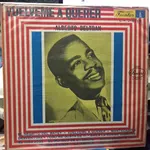
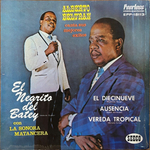
El negrito del Batey
1958 · Album · 12 tracks
Alberto Beltrán — Alberto Amancio Beltrán, Palo Blanco, 5 May 1923 – Miami, 2 February 1997 — was a Dominican bolero singer. He is remembered for one record made in Havana in 1954, and the nickname it gave him outlived him: El Negrito del Batey.
Early years and formation
He barely got through primary school. His family had no money and he sold sweets in the street as a child. Music took him at fourteen, when he sang as an amateur on the radio; the broadcast went well enough that he went and took singing lessons.
Between 1946 and 1951 he passed through Dominican groups, Brisas de Oriente among them, and then put together one of his own, the Dominican Boys.
Puerto Rico, Cuba, and Myrta Silva
He left for Puerto Rico in 1951 and cut El 19 there with Los Diablos del Caribe, Mario Hernández’s group. From there he went to Cuba — Santiago first, then Havana, arriving on 15 July 1954 to work with the Puerto Rican singer and songwriter Myrta Silva at Radio Mambí.
La Sonora Matancera
The Sonora Matancera sent for him a month later. On 16 August 1954 he recorded two boleros with them on a single 78: Ignoro Tu Existencia, by Rafael Pablo de la Motta, and Aunque Me Cueste la Vida, written by the Dominican Luis Kalaff.
On 16 November he recorded El Negrito del Batey, a merengue written by Medardo Guzmán — not a bolero. The record that made a bolero singer famous was not one. It sold across Latin America and handed him the name he carried for the rest of his life. The same day he cut Todo Me Gusta de Ti, Enamorado, and El 19 for a second time.
His last session with the orchestra was on 18 January 1955. Five months, and it defined him.
Venezuela
He spent a stretch in Venezuela recording with the Sonora Caracas, Los Megatones de Lucho and the orchestra of Jesús Chucho Sanoja. The Dominican bandleader Billo Frómeta, long settled there, contracted him for two albums cut in Cuban studios: Evocación in 1956, where he sang alone, and La Lisa-Maracaibo, which he shared with the Cuban singer Carlos Díaz.
On screen
He acted in the television series Pantalla de Éxitos across 1964 and 1965, and wrote music for the short Aquel 19 in 1985.
The recording outlasted the singer. Aunque Me Cueste la Vida, which he cut in Havana in 1954, was used in Captain Pantoja and the Special Services in 1999 — the film of the Vargas Llosa novel, forty-five years after the session and two years after he died.
Legacy
He died in Miami and was buried with honours at home. Very few Dominican singers of his generation reached the whole of Latin America; he did it from a Cuban studio, with a Cuban orchestra, singing a merengue.
1958 · Album · 12 tracks
1960 · Album · 10 tracks
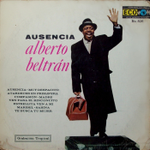
1969 · Album · 10 tracks
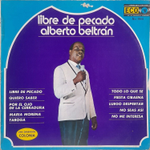
1971 · Album · 10 tracks
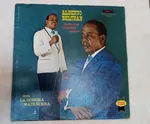
1973 · Album · 12 tracks
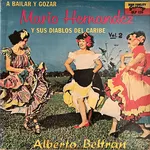
1992 · Album · 12 tracks
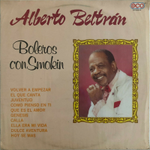
1992 · Album · 10 tracks
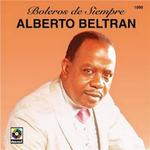
1994 · Album · 15 tracks
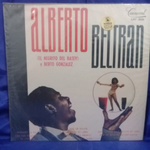
1995 · Album · 10 tracks

1995 · Album · 10 tracks
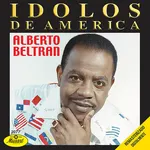
1996 · Album · 12 tracks
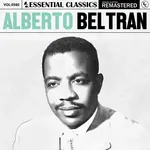
2024 · Album · 20 tracks
1973 · Single · 2 tracks
1973 · EP · 4 tracks