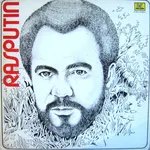
Rasputín
1984 · Album · 8 tracks
July Mateo, known throughout his career as "Rasputín," was a Dominican trumpeter, arranger, bandleader and singer, born Julio César Mateo Bautista on September 23, 1955 in Hato Mayor del Rey. He spent the first half of his career inside other people’s horn sections and the second half in front of his own orchestra, and he wrote one merengue — "Viejo año" — that the Dominican Republic has not been able to end a year without since.
Early years and the trumpet
Mateo came out of Hato Mayor, the small eastern province whose capital, Hato Mayor del Rey, sits in cattle and sugar country well outside the Santo Domingo music industry. He arrived in that industry as a brass player rather than a singer, and the trumpet stayed the foundation of everything he did afterward: it shaped how he wrote, how he arranged, and how his own orchestra would eventually sound. Along with "Rasputín" he also answered to "El Monje" — the monk — a second nickname that followed him through the same years.
The orchestra years
Through the late 1970s and into the 1980s Mateo worked as a trumpeter and arranger inside several of the orchestras that defined Dominican merengue in its most competitive period, among them Los Hijos del Rey, Los Kenton, and the orchestra of Wilfrido Vargas. This was the era when merengue was being rebuilt around tighter horn writing and faster tempos for an international audience, and Mateo spent it in exactly the seat where that rebuilding happened — arranging the brass lines rather than singing over them.
His own orchestra
In the mid-1980s Mateo formed his own orchestra and stepped to the front of it, moving from arranger to bandleader and lead voice. The records followed quickly: the album Como Nadie in 1984 and Rasputín, issued in Venezuela the same year and pressed again in 1985, carried a run of songs to the top of Dominican radio. His own singing was plain and direct rather than virtuosic, and it suited material that was more interested in a message than in display.
Signature songs
The core of his catalog dates from this stretch in the 1980s:
"Oye" — also known by its opening line, "Abre tus ojos," his most quoted song and an unabashedly optimistic one,
"Viejo año" — a year-end merengue that became a fixture of Dominican New Year’s Eve,
"Primavera," "El ilegal," "Titiguay" and "Toda la vida,"
and "Como nadie," "El carrito," "Te olvidé," "No seas boba," "Anja Unjú," "Martinha," "Yo también" and "Canta mundo."
Later years and death
A stroke in the mid-2010s put Mateo in intensive care and left him with lasting health complications, and he never fully returned to performing. He died at his residence in Santo Domingo in early November 2018, at 63, of a cerebrovascular accident; he was buried on November 5 at the Parque del Prado cemetery on the Guerra–Bayaguana highway.
Legacy
Mateo’s standing rests on a combination that was uncommon among Dominican merengue frontmen: he was a working brass player and arranger first, and the orchestra he eventually led was built by someone who understood it from the inside of the horn section. His songs kept an unusually plain optimism at a moment when merengue was mostly selling speed and spectacle.
"Viejo año" is the piece that outlived him. It is played across the Dominican Republic every December 31, which is why the headlines announcing his death in November 2018 reached for the same line — that Rasputín had not made it far enough into the year to see off another old one.
1984 · Album · 8 tracks