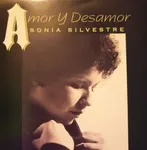
Amor y desamor
1990 · Album · 11 tracks
Sonia Margarita Silvestre Ortiz was a Dominican singer and broadcaster. She came up through the protest song of the seventies and spent the second half of her career on bachata, which she sang without lowering it or dressing it up, and she is one of the few Dominican singers whose repertoire is argued about as a body of work rather than as a run of hits.
Hato Mayor del Rey
She was born in a hospital in San Pedro de Macorís in 1952 because the town her parents lived in had none, and she always said she was from Hato Mayor del Rey, where she was raised until she was almost eleven. Next to her grandmother’s house stood the largest bar in town, and its jukebox ran through boleros and whatever else Latin America was listening to. The family moved to Santo Domingo in 1962. She later studied education and languages at university.
Gente
She got into the business through Cecilia García, who brought her in as a backing voice on advertising jingles while she was still a teenager. Her official debut came in May 1970 on the television programme Gente, produced by Freddy Ginebra, and she went on to sing at the Boite la Oficina and the other rooms of the moment with the group Los Bemols.
The turn came in 1971, when the composer Leonor Porcella de Brea picked her to sing ¿Dónde Podré Gritarte Que Te Quiero? at the fourth Dominican Song Festival. She came second, finished the same year as a finalist in Bogotá, and recorded her first album, Esta Es Sonia Silvestre.
Nueva Forma
Her politics took her into the nueva canción. She joined Nueva Forma, an experimental group of social song whose members included Víctor Víctor, and the group appeared at Siete Días con el Pueblo in November 1974, the week-long festival that became the reference point for Dominican song under political repression.
After Nueva Forma broke up she recorded Sonia Canta a Poetas de la Patria for Karen Records, and took it to the Teatro Nacional with the National Symphony Orchestra under Jorge Taveras. No popular singer had given a concert in that hall before.
Cuba
Her long association with Cuba began in 1974, when Casandra Damirón chose her to look after the Cuban National Folkloric Ensemble during the Central American and Caribbean Games in Santo Domingo. At Siete Días con el Pueblo that November, Silvio Rodríguez and Noel Nicola invited her to the island, and she went the following year, touring it with Víctor Víctor and the orchestra Irakere.
The Cuban film institute made a documentary about her, directed by Juan Carlos Tabío, one of the first it devoted to a single performer. She returned in 1988 for a tour billed as Tres Mujeres del Caribe alongside Lucecita Benítez and Sara González, and in 2008 she was appointed cultural minister-counsellor at the Dominican embassy in Havana.
Yo Quiero Andar
The album Yo Quiero Andar, produced by Cholo Brenes, moved her into bachata and gave her the largest audience of her life. She toured it with the group Trilogía — Chichi Peralta on percussion, Héctor Santana on bass and Juan Francisco Ordóñez on guitar — and that work matured the tecnoamargue, a style built on the bachatas of Luis "Terror" Días.
The two of them worked the genre together for years. Her reading of his Corazón de Vellonera became a video that won its category in 1984, and in 2010 she filled the Palacio de Bellas Artes with a concert in his memory. Amor y Desamor and Mi Corazón Te Seguirá followed in the nineties, and in 2007 she made Verde y Negro with Víctor Víctor.
The honours
She was named most popular singer at the Premios El Dorado three years running from 1975, and took the same award for best show in 1977. The Casandra Awards gave her most outstanding singer and best video in 1990; Puerto Rico gave her the Premio Paoli as international artist of the year in 1991; and in 2000 she won El Soberano, the highest of the Dominican awards.
The Senate declared her a national glory of popular song in March 2004, and BanReservas placed her in its national musical reserve in 2011. She spent the early two thousands running the Casas de Cultura for the Ministry of Culture. She died in Santo Domingo in April 2014.
1990 · Album · 11 tracks
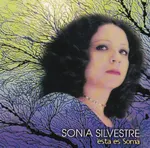
1999 · Album · 15 tracks