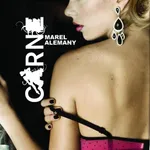
Carne
2009 · album · 9 tracks
Marel Alemany is a Dominican singer-songwriter, writer, and filmmaker who became one of the leading voices of the country's pop-rock and singer-songwriter scene with the albums «De Papel» (2006) and «Carne» (2009). After thirteen years without a full album he returned in 2022 with «Salir al Sol».
Background
Alemany studied piano, flute, and violin as a child and, as a teenager, sang with several local groups and appeared regularly in concerts and on television. In 1994 he moved to Seville, Spain, to study at university, where he came into contact with the city's musicians and bohemian scene and took up the guitar, which became his inseparable instrument. He lent his voice and songs to numerous advertising campaigns and played every Thursday at the bar of Casa de Teatro in Santo Domingo. He names Rafael, Joan Manuel Serrat, and Rocío Jurado among his earliest influences, and later soul, Fania-era salsa, Juan Luis Guerra, and the singer-songwriter tradition.
Early career
In 2003 he won the prize for best pop song, «Palabras en el Aire», at the Casa de Teatro music awards, and he opened for the Spanish singer-songwriters Ismael Serrano and Pedro Guerra at the Teatro Nacional. His debut album, «De Papel» (2006), produced a set of songs that remain standards of Dominican rock, among them «Palabras en el Aire», «Lucecita», «Mi Animal», and «Llévatelo Todo». «Nada» was used as the theme of the telenovela «Gitanas», and «Lucecita» and «Mi Animal» reached number one on several radio stations.
His second album, «Carne» (2009), was recorded almost entirely in New York with session musicians and announced with the single of the same name. He described its approach as direct and uncensored. On the album he recorded «Dame Lucha» with Vakeró. He was one of the young artists supported by Víctor Víctor, and at the 2020 tribute to Víctor Víctor organized by the Centro León he spoke of him alongside Pavel Núñez and Vicente García.
Return and «Salir al Sol»
After «Carne» he released only singles, among them «Tu Guerra y la Mía» and «Navegaré», and worked in creative and film projects while he and his family moved to Canada. In July 2022 he presented «Salir al Sol», a nine-song album produced by Isaac Hernández, with sound engineering by Alan Lechron, that Listín Diario described as leaning toward bachata fusions while returning to the tone of «De Papel». Its songs address love as a couple, as a father, and for the island, with titles such as «Dulce Ingenuidad», «Quedó el Amor», «Tu Luz en Mí», and «Un Día sin Ti». Two songs break with that mood: «Sangre Brava», a protest song on social ills, and «El Gallo», on machismo, written after he asked on social media for the sexist phrases boys are told. The video for the single «Si Tú Estás» was directed by Ernesto Alemany.
Film and later work
Alemany also works as a filmmaker: he co-directed the short «CCF's Solstice Stories – Prologue» (2022) and wrote the script for the video of Diego Mena's «The Fool» (2025), filmed in Ontario, Canada. On 10 May 2025 he and Pavel Núñez shared the stage at Hard Rock Café Santo Domingo in the concert «Pavel a Marel», billed as a long-postponed meeting of two singer-songwriters once seen as rivals, and in 2025 they released the singles «Lucecita» and «Canción de Cuna para mi Abuela» under the title «Pavel a Marel». Every January he presents a concert at Casa de Teatro with guest musicians, including the one on 2 January 2026, with a band that included Gigi Mota, Edgar Molina, Isaac Hernández, and David Vásquez. He describes himself as singer-songwriter, writer, filmmaker, and nonconformist.
Legacy
Alemany's first two albums are counted among the notable Dominican pop-rock records of the 2000s, and «Lucecita» and «Mi Animal» are still his best-known songs. His career combines song, literature, and cinema across the Dominican Republic and Canada.
2009 · album · 9 tracks

2022 · album · 9 tracks
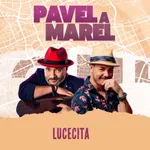
2025 · single · 1 track