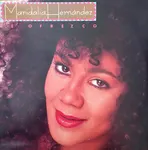
Te ofrezco
1992 · Album · 8 tracks
Maridalia Hernández Morel is one of the most distinguished, technically gifted and emotionally resonant voices in Dominican and Latin American music. Born in Santiago de los Caballeros, she comes from a lineage where art is not an occupation but an inheritance. She is the granddaughter of maestro Julio Alberto Hernández, a foundational figure of Dominican musical nationalism, founder of the National Symphony Orchestra, composer, arranger and educator. On her mother’s side she inherits vocal talent, stage presence and musical instinct from a mother who once sang with Armando Recio and Guarionex Aquino. The Morel family includes painters, caricaturists, musicians and writers such as Yoryi Morel, Príamo Morel and Orlando Menicucci.
At age five, her mother heard her singing and told her father: “Julito, come listen to your daughter—she is going to be a singer.” By eight she was studying piano, theory, cello and classical voice. She later trained at the Dominican Academy of Music, the National Conservatory, and became soprano instructor for the National Choir.
Early Performances
Her first professional appearance came at age 17 at Casa de Teatro, invited by Luis Díaz and Claudio Cohén. She won the school’s Festival of the Voice accompanied by pianist Jorge Taveras, who became a lifelong musical ally.
Theater and the Turning Point
In the early 1980s she joined the opera chorus at the National Theater under Luis José Mella, performing Tosca, La Bohème and Madame Butterfly.
Mella heard her sing New York, New York in his production Sonido para una Imagen (1981). That night changed her life: she had already been accepted to study classical piano in Vienna, but the impact of her performance redirected her permanently toward popular singing.
The Birth of 440
While studying cello, she met Juan Luis Guerra, who sold her his own cello. After returning from Berklee, Guerra asked her to help assemble a vocal quartet inspired by Manhattan Transfer. She recruited Mariela Mercado and Roger Zayas-Bazán. Thus 440 was born—without commercial intent, without management, simply four gifted young musicians creating something larger than themselves.
The group became an artistic and commercial phenomenon. Maridalia was the principal female voice, contributing to albums such as Soplando, Mudanza y Acarreo and Mientras Más Lo Pienso… Tú. Songs like Por eso, Si tú te vas and Nuestro amor became classics.
Leaving 440
Unlike most stories, Maridalia did not leave a group to become a soloist—she was already a soloist before 440. But her parallel careers became impossible to manage. After winning Viña del Mar and receiving international offers, she faced an internal conflict: both careers were growing, and there was no professional structure to sustain them. She left before the group exploded internationally, a decision made emotionally and without guidance.
Viña del Mar: Her Defining Moment
In 1986 she represented the Dominican Republic at the Viña del Mar International Song Festival with Para quererte, written by José Antonio Rodríguez and Manuel Tejada.
The song arrived at the last minute but became the public’s favorite as soon as it aired on Chilean radio. She won the Silver Seagull for Best Song, one of the most important achievements in Dominican music history.
Her performance became a continental reference. Para quererte remains one of the most beloved Dominican ballads.
OTI and National Recognition
In 1989 she won third place at the OTI Festival with Te ofrezco.
Her show Para quererte Maridalia at the National Theater earned the Casandra Award for Best Show and the Soberano, making her the first woman to receive the country’s highest artistic honor.
The Hardest Chapter: 10 Years of Silence
After signing with Karen Records, she endured one of the most painful periods of her career: two albums shelved, a restrictive contract, an advance that became perpetual debt, and a decade unable to record or sign elsewhere. She suffered insomnia, panic attacks, depression and cardiac issues. Thanks to broadcaster Rafael Corporán de los Santos, she finally obtained her release.
She describes the experience as:
“I went to study music and ended up with a doctorate in life.”
Rebirth
After regaining her freedom, she founded Ankón Music Group and Hernández Morales.
She released Libre, a production of exceptional international quality.
She returned triumphantly to major stages with acclaimed concerts at the Palacio de los Deportes, Hard Rock Café and the Gran Teatro del Cibao.
Amorosa: A Masterpiece
Her album Amorosa, produced by Juan Luis Guerra with arrangements by José Antonio Molina and Manuel Tejada, is considered a symphonic jewel—one of the finest Dominican recordings ever made.
Notable Collaborations
She has performed with:
Camilo Sesto
Andrea Bocelli
Milly Quezada & Fefita la Grande
Juan Luis Guerra & 440
Gilberto Santa Rosa
Glen Monroig
José Antonio Molina (who composed the overture Yaya in her honor)
Artistic Philosophy
Maridalia is a fierce defender of musical excellence, authenticity and artistic integrity. She rejects mediocrity and the notion that “quality is too much for this country.” She is an interpreter who sings from emotional truth, with impeccable technique and unmatched stage connection.
Legacy
Maridalia Hernández is:
The most important female voice in Dominican music.
A continental-level interpreter.
A symbol of excellence, discipline and authenticity.
An artist who survived the industry, transformed it and continues to represent the highest standard of musical artistry.
1992 · Album · 8 tracks
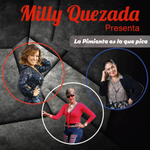
2017 · Single · 1 track