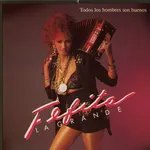
Todos Los Hombres Son Buenos
1997 · Album · 10 tracks
Fefita la Grande, born Manuela Josefa Taveras Cabrera on 18 September 1943 in the village of El Orégano, near San José in San Ignacio de Sabaneta, Santiago Rodríguez, is a Dominican accordionist, singer and bandleader, and the foremost woman in the history of merengue típico. She took up the accordion as a small child at a time when the instrument was effectively closed to women, and has spent seven decades at the head of a music that belongs to the Cibao countryside. In 2016 she was given the Gran Soberano, the highest distinction Dominican arts confers.
Early years and the accordion
She was born to Eliseo "Seíto" de Jesús Cabrera Fernández and María Ana Taveras, and carries her mother's surname first because her father did not recognise her at birth. She has one full sister, María Celeste, and six half-siblings on her father's side. The accordion reached her in her father's workshop while she was still very small, and she took the merengue típico pioneer Guandulito as her model. By seven she was known around her community for her playing; by nine she was working parties with accordion, güira and tambora.
In about 1956, aged roughly twelve, she played for José Arismendy "Petán" Trujillo, who ran the state broadcaster La Voz Dominicana and was a brother of the dictator. He gave her a hundred pesos — the first money her playing earned her from outside her own district.
Three names
She has been named three times over. Tatico Henríquez called her la Vieja Fefa when she was seventeen. Bartolo Alvarado, El Ciego de Nagua, christened her Fefita la Grande at around twenty-two, and that is the name the public kept. Since 1980 she has preferred la Mayimba, and it is the one she uses for herself.
Taking merengue típico abroad
Touring alongside Rafael Solano took her out of the country for the first time, and she became the first Dominican artist to carry merengue típico to Europe. Her debut album was Si Quiere Venir Que Venga. What she brought was not a softened version for foreign ears but the accordion music of the Cibao as it is actually played — fast, unpolished and physical.
Recordings
Merengues Típicos Vol. 1 — 1979
La Pimienta Es la Que Pica — 1980
Fefita la Grande — 1981
La Cintura Mía — 1989
La Ciudad Corazón — 2001
Vamos a Hablar Inglés, La Chiflera and O Te Menea O Te Apea, among the songs most identified with her
Working across generations
Fefita has kept recording with musicians young enough to be her grandchildren rather than settling into heritage status. In 2019 she cut a new version of La Pimienta Es la Que Pica with Milly Quezada and Maridalia Hernández, three careers meeting on one record. She has also worked with Krisspy and with the accordionist El Prodigio, whose own playing descends from the tradition she carried.
Recognition
Gran Soberano — 1 June 2016, the highest award in Dominican arts, after several earlier nominations
Recognised by the Senate of the Dominican Republic as a pioneer of merengue típico
A central figure in the case for merengue's inscription by UNESCO as Intangible Cultural Heritage of Humanity, 30 November 2016
Her life dramatised in a biographical film presented at the Dominican film festival
Legacy
Merengue típico was a men's profession when Fefita picked up the accordion, and the instrument in particular was treated as beyond women. She did not argue the point; she outplayed it, and stayed long enough that the argument stopped being made. Every Dominican woman who has taken up the accordion since has done so on ground she cleared. That she is still performing in her eighties, at the tempo the music demands, is not a sentimental footnote to the achievement — it is the achievement.
1997 · Album · 10 tracks
2002 · Album · 12 tracks