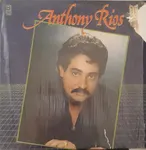
Anthony Rios
1983 · Album · 8 tracks
Anthony Ríos, born Froilán Antonio Rodríguez Jiménez on July 17, 1950 in Las Cañitas, Sabana de la Mar, was a Dominican singer, songwriter, television comedian and actor — for three decades the country’s definitive romantic voice, and for another two a fixture of its living rooms. He wrote most of what he sang, gave away songs that became hits for other people, and was as widely known in the end for a comedy program as for the ballads that made his name.
Early years and the Combo Show
Ríos came from Las Cañitas, a village in the eastern municipality of Sabana de la Mar, and moved as a boy to Hato Mayor del Rey. He shined shoes there, singing while he worked, and went door to door with Christmas aguinaldos in December. He also picked up the guitar and began turning up on local radio. The broadcaster Joaquín Jiménez Maxwell heard him, and took him to the capital.
What Maxwell delivered him into was an opening: Fausto Rey had just left the Combo Show of Johnny Ventura, and in the early 1970s Ríos — then still carrying the nickname "El Kínder" for how young he looked among the veterans — took the vacant spot. His first song with the group, "El sentimental," made him one of the most recognized voices in the Dominican Republic almost immediately, and gave him the name he would answer to for the rest of his life. The debut album that followed carried "Pudiera ser," "Morir de amor," "Viejo amigo," "Estoy a tu orden," "Hoy daría yo la vida" and "Condenado a quererte" — all of them his own compositions.
Part of the appeal was simply how he looked. A thick head of hair drew constant comparison to Sandro de América, the Argentine idol then at his peak in Dominican radio, and Ríos arrived with the bearing of a romantic lead at a moment when merengue orchestras were not selling that.
El Sonido Original and the solo career
In 1979 Ríos left the Combo Show together with the percussionist Luisito Martí to found their own group, El Sonido Original. It did not do commercially what either man had hoped, and the venture is remembered less for its records than for the partnership it started, which would matter enormously later on. Ríos went on to a solo career instead, releasing his first album under his own name in 1983 and working steadily across balada, bolero, merengue and bachata for the next three decades. By 1993 he was on his nineteenth album, Boleros como ayer, for Juan y Nelson Records; his twentieth, En bachatas, came in 1996 on Kubaney.
Songwriter for others
Ríos’s pen reached well past his own catalog. He wrote for Fernando Villalona at home, and abroad for the Puerto Rican singers Yolandita Monge, Sophy and Lissette Álvarez, the Colombian Pastor López and the Mexican Fernando Allende. "La distancia," written for Yolandita Monge during a brief relationship between them, is the best known of those. Among his own standards are "Tengo una mancha," "Señora tristeza," "Si usted supiera señora," "Comprenderse más y amarse menos" and "Fatalidad."
Television and film
The second half of his public life was largely televised. He worked as a presenter and comedian on El Show del Mediodía, and then reunited with Luisito Martí for El Show de Luisito y Anthony, which became one of the most popular programs in the history of Dominican television and introduced him to a generation that knew the comedian before it knew the singer. He also acted in film, appearing in Nueba Yol 3: Bajo la Nueva Ley (1997), Vamos de Robo (2014) and Mañana no te olvides (2017).
Later years and death
At the end of 2018 the Dominican Congress approved a measure to honor him formally, but the recognition was never carried out. He died of cardiac complications on March 4, 2019, in Santo Domingo, at 68.
Legacy
Ríos is the reference point for Dominican romantic song in the 1970s and 1980s — the singer who proved that a Dominican balada catalog could stand next to the imported ones, and who wrote it himself instead of buying it. That he did so after entering the business through a merengue orchestra is characteristic: he moved between genres and between media without treating any of them as a demotion.
His songs remain standards of the Dominican romantic repertoire, and the comedy program he built with Luisito Martí is remembered as a landmark of national television. Few Dominican artists of his generation left a mark on both the record shelf and the broadcast schedule.
1983 · Album · 8 tracks