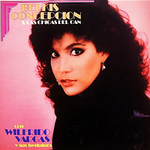
Belkis Concepción & Las Chicas del Can con Wilfrido Vargas y sus Beduinos
1984 · Album · 10 tracks
Belkis María Concepción Hernández, known as Belkis Concepción, is a Dominican pianist, singer, arranger and bandleader, born in Santo Domingo on 20 June 1961. She founded Las Chicas del Can, the first all-female merengue orchestra in the Dominican Republic, and lost the name to her business partner while she was too ill to work. She has led orchestras of her own ever since.
A question at nine
Concepción was the daughter of Julio César Concepción Pacheco and María Hernández de Concepción. At nine she asked her mother why there were no all-female merengue orchestras, was told the work was too hard for women, and answered that she would form the first one. She took her bachillerato at the Colegio Santa Luisa de Marillac, studied piano at the Conservatorio Nacional de Música, and began a law degree at the Universidad Nacional Pedro Henríquez Ureña. While still at school she put together a band with classmates to play at its own functions.
Las Muchachas
In 1976 she formed Las Muchachas, which worked private parties, social clubs and television. Three years later she started something more ambitious: a complete dance orchestra of women — trumpets and trombones, saxophone, bass, conga, tambora and the güira that became its signature — recruited largely from the Escuela Iris del Valle in Los Mina. Concepción directed it from the piano and keyboards, and Félix del Rosario and Bertico Sosa helped as it took shape.
Las Chicas del Can
The orchestra debuted in 1981 on El Show del Mediodía, the television variety programme produced by Yaqui Núñez del Risco, who named them Las Chicas del Can on air. They were billed as La Pionera Belkis Concepción y Las Chicas del Can. Wilfrido Vargas came in as musical adviser and, from behind the scenes, shaped the group’s most successful years. The project had not been registered when the alliance was made, and it was put in his name.
Concepción made "La media María", "El higuerón" and "Comején" popular with them, and took the orchestra to the United States, Venezuela, Puerto Rico, Colombia, Curaçao and Aruba.
In 1985, six years after the orchestra first took shape, Guillain-Barré syndrome forced her to stop working. Vargas, who held the registration, kept the group and its players. She has said since that the name was taken while she was in bed, that having never registered it she had no way to hold it, and that she and Vargas nonetheless remained on good terms. Her place went to the group’s second vocalist, Miriam Cruz.
Her own orchestras
After recovering she returned with Belkis Concepción y su Orquesta, registered in her own name, which opened at the Maunaloa Night Club and Casino in Santo Domingo and went on to play France, the Netherlands, Spain, the United States and Côte d’Ivoire. "La vecina", "Señora", "Luna mágica" and "El hombre que yo amo" come from those years. She later assembled Belkis Concepción y las Estrellas del Merengue, with Dominican players alongside Colombians from Barranquilla.
El Reencuentro
"Las Chicas del Can: El Reencuentro" brought former members of every era together at the Teatro La Fiesta of the Hotel Jaragua in October 2024, and returned to the same stage on 21 February 2025. Concepción, who had proposed the idea nine years earlier, said the singers who took part had acknowledged her as the founder of the movement. She continues to tour a Las Chicas del Can across Latin America — four dates in Costa Rica in May 2025 — and places the group’s fiftieth anniversary in 2026, counting from Las Muchachas in 1976. The Corporación Wilfrido Vargas has since stated that the name is its registered mark and requires prior authorisation; Concepción restated her own claim to have created the group on Color Visión in October 2025.
Legacy
Concepción was the first woman in the Dominican Republic to assemble and direct a full merengue orchestra of women — not a vocal group with hired players, but an ensemble whose horns and percussion were women as well. The orchestra she founded was the first all-female group to take merengue to Africa. She has worked in music for close to half a century and is known as La Pionera.
1984 · Album · 10 tracks