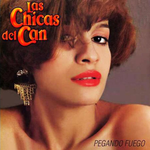
Pegando fuego
1983 · Album · 9 tracks
Las Chicas del Can were the first all-female merengue orchestra in the Dominican Republic. They grew out of a group the pianist Belkis Concepción assembled in Santo Domingo in 1976, recorded through the 1980s and 1990s under the management of Wilfrido Vargas, and toured Latin America, Europe and Japan. The name has outlasted every one of its lineups: more than one ensemble performs under it today, and its ownership is disputed.
Las Muchachas
In 1976 Belkis Concepción, a pianist and bandleader, recruited a group of women instrumentalists and backing singers and called them Las Muchachas. She had wanted an all-woman band since she was nine, and set out to staff it fully — women on trumpets, saxophones and percussion, not only at the microphones. Five years later she joined forces with the trumpeter and impresario Wilfrido Vargas, and the broadcaster Yaqui Núñez del Risco gave the new ensemble the name it would keep. They began working under it in 1982, billed at first as Belkis Concepción y Las Chicas del Can, and their first records — Belkis y Las Chicán (1982) and Belkis Concepción & Las Chicas del Can (1984) — came out on Karen Records.
The Vargas years
In 1984 Concepción, who was the orchestra’s pianist, director and owner, had to step away after being diagnosed with Guillain-Barré syndrome. Her place went to the group’s second vocalist, Miriam Cruz, then fourteen, and before the year was out Vargas had made the replacement permanent. Eunice Betances and Verónica Medina had joined in 1983; Medina sang lead for a period and later went out on her own.
Through the rest of the decade the group recorded for Sonotone — Pegando fuego (1986), Mi general (1987), Caribe (1988) — and put out "Besos callejeros", "La media María", "Sukaína", "Ta’ pillao" and "El negro no puede". Teresa Domínguez turned "Juana la Cubana" into a dance that carried the record to platinum in Venezuela in 1988. They toured Venezuela, Guatemala, Costa Rica, Colombia and Peru, Spain, the Netherlands, France, Italy and Finland, and Japan.
The dispute over the name
In 1985 Concepción stated publicly that she, not Vargas, had created the group and therefore owned its name, tracing it to Las Muchachas in 1976 and to Núñez del Risco’s coinage. She had never registered it, and said it had been taken from her while she was ill. She broke with Vargas that year; he kept the orchestra and the name.
Las Monumentales
In 1992 most of the lineup left with Miriam Cruz to work on their own. Vargas rebuilt the group around four musicians who came over from Grupo Mandarina — Janni Viloria, Aracelys Ferreira, Adalgisa "Grissel" Báez and the Guatemalan Michell Flores — with Florangel del Villar joining months later and the Costa Rican trumpeter Ana Lucía Retana Saavedra among the players. This lineup was billed as Las Monumentales Chicas del Can and recorded Explosivo (1992), Botando Chispas (1994), Derramando Sueños (1996) and Te quiero ver (1998), with "Celoso", "Voy pa’ allá", "Hacer el amor con otro" and "Sin compromiso". Flores left for a solo career and that lineup broke up in 1998.
Later lineups
Vargas sold the rights to the promoter Evelio Herrera, who put a new group on stage in 2007 as Las Espectaculares Chicas del Can. It recorded and toured for two years amid repeated departures. A further relaunch assembled five members, among them Vargas’s daughter Alinna Vargas, until she announced a solo project in August 2011.
A contested name
By the 2020s more than one ensemble was working under the name. Belkis Concepción leads a Las Chicas del Can that tours Latin America — four dates in Costa Rica in May 2025 alone — and places the group’s fiftieth anniversary in 2026, counting from 1976. In Santo Domingo, "Las Chicas del Can: El Reencuentro" filled the Teatro La Fiesta in October 2024 with three generations of players. The Venezuelan promoter Omar Enrique has contracted a Las Chicas del Can for three years and says the lineup he books is legally registered and works under official licence, with representation in Ecuador, Peru, Chile and Argentina.
In April 2025 the Corporación Wilfrido Vargas issued a communiqué stating that the name is a registered trademark belonging to the firm, and that promotional or artistic activity using it requires prior formal authorisation; the same document acknowledged that the group had originally been formed on Belkis Concepción’s initiative. Vargas then withdrew from concerts Omar Enrique had scheduled in Venezuela for that June, and Enrique, producing signed contracts, announced he would sue in both countries. The corporation repeated its statement in May 2026.
Legacy
"El negro no puede" returned to public attention in May 2010, when Shakira released "Waka Waka (Esto es África)" with the same chorus. Both drew on "Zangalewa", a Cameroonian marching song popularised by the group Golden Sounds, which is where Vargas had taken it; he said he would not sue, since the song was not his. Las Chicas del Can were the first fully female merengue orchestra in the Dominican Republic, and out of their ranks Miriam Cruz, Verónica Medina and Michell Flores each left to record on her own.
1983 · Album · 9 tracks
1985 · Album · 14 tracks
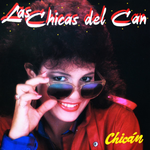
1985 · Album · 10 tracks
1987 · Album · 10 tracks
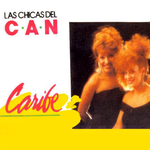
1988 · Album · 10 tracks

1988 · Album · 15 tracks
1991 · Album · 14 tracks
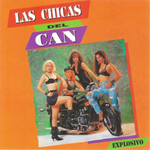
1992 · Album · 11 tracks

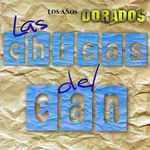
1994 · Album · 13 tracks
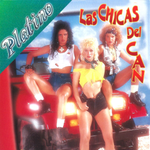
1994 · Album · 8 tracks
1998 · Album · 13 tracks
2022 · Album · 12 tracks
2023 · Album · 10 tracks

2016 · Single · 1 track

2020 · Single · 1 track
2021 · Single · 1 track

2023 · EP · 4 tracks

2023 · EP · 4 tracks