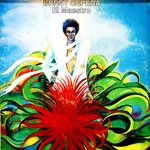
El maestro
1980 · Album · 8 tracks
Bonny Cepeda, born Fernando Antonio Cruz Paz on June 5, 1954 in Santo Domingo, is a Dominican pianist, arranger, bandleader and singer, and the first merengue artist ever nominated for a Grammy Award. Known as "El Maestro Joven del Merengue," he spent the 1970s moving restlessly between other people’s orchestras before building one of his own that took merengue onto an international stage no Dominican band had reached before.
Training and the orchestra years
Cepeda was the son of Anan Cepeda — born Ana Cepeda — a singer who was among the first women to sing backing vocals in the orchestra of Johnny Ventura, and who was his mentor as much as his mother. He took her surname for the stage; the first name, by his own account, came from a plush rabbit. His brother Richie Cepeda became a merengue musician as well. Cepeda studied at an academy in Villa Consuelo and then at the National Conservatory, picking up several instruments and settling on piano — a formal grounding that set him apart from bandleaders who came up entirely by ear, and that shows in the arranging he did later. He had a brother, Richie Cepeda, who also recorded merengue.
His twenties were a tour of the Dominican orchestra circuit. He started with Los Monjes in 1972, at eighteen, and the group lasted about a year. He played piano in Los Beduinos under Wilfrido Vargas, was a founding member of Los Hijos del Rey in the mid-1970s, formed Bonny con Kenton in 1978 with Tito and Luis Payano, passed briefly through the band of Fernando Villalona in 1979, and led a third project, La Gran Orquesta, from which his own musicians eventually expelled him. The pattern earned him a second nickname he has never entirely shaken: "El Inestable," the unstable one.
Bonny Cepeda y su Orquesta
The instability ended when he put his own name on the marquee. Bonny Cepeda y su Orquesta broke through with Arrasando con todo in 1982, and Cepeda — until then a pianist and arranger who stayed behind the keyboard — stepped out as a vocalist with "Asesina."
What followed was a long commercial run built on a particular instinct: he was unusually good at hearing a hit inside somebody else’s song and rebuilding it as a merengue. "Una fotografía," adapted from an Italian original, is the clearest example, and the approach gave him a flexibility across shifting fashions that few of his contemporaries managed. "Me tiene chivo," "Ay, doctor," "Estoy caliente" and "Merengue clásico" belong to the same stretch, and his catalog runs past forty albums and compilations between 1976 and 2008.
The Grammy nomination
In 1986, at the 28th Annual Grammy Awards, Cepeda was nominated for Best Tropical Latin Performance for the album Noche de Discotheque — the first time a merengue artist had been nominated at all. The significance was less the trophy, which he did not win, than the category admission: merengue had been treated by the American industry as a regional dance music rather than a form that competed on the same terms as salsa. The nomination was the moment that assumption broke.
Awards and public office
Recognition continued through his later career:
the Congo de Oro at the Barranquilla Carnival’s orchestra festival in 2012,
and the Soberano al Mérito from Acroarte in 2014.
In 2020 President Luis Abinader appointed him Vice Minister for Decentralization and Territorial Coordination at the Ministry of Culture, and he largely stepped back from performing while serving. He resigned the post in January 2025, making his resignation letter public, after criticism of his attendance at the inauguration of Venezuelan president Nicolás Maduro; he said he preferred to step down rather than fail his duties, and returned to music.
Legacy
Cepeda is remembered at home as an entertainer — relentlessly danceable, built for the long party, a fixture at Dominican celebrations of every kind — and that reputation is deserved but incomplete. He was also a conservatory-trained musician who arranged his own material, and the 1986 nomination was a structural event for the genre: proof to the industry, and to merengue musicians themselves, that the music could be judged at the same level as anything else in tropical Latin music.
Everything merengue achieved internationally in the years afterward was built on a door that Noche de Discotheque opened first.
1980 · Album · 8 tracks
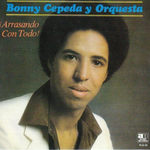
1982 · Album · 8 tracks

1983 · Album · 10 tracks

1984 · Album · 10 tracks

1986 · Album · 8 tracks

1987 · Album · 8 tracks

1990 · Album · 8 tracks

1991 · Album · 10 tracks
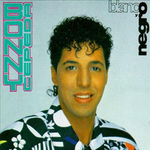
1992 · Album · 10 tracks

1993 · Album · 12 tracks
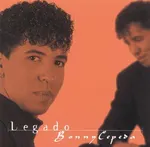
2000 · Album · 12 tracks

2004 · Album · 16 tracks

2024 · Album · 10 tracks