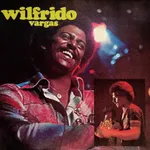
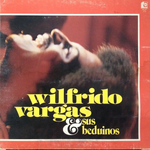
El Jarro Pichao
1974 · album · 13 tracks
Los Beduinos was a Dominican merengue orchestra from Santo Domingo, active from 1972 to 1982 and billed on its records of the 1970s as «Wilfrido Vargas y sus Beduinos». It began as a house band in Arab costume at a night club and became the vehicle for the trumpeter Wilfrido Vargas, whose faster merengue, with shorter brass sections and a more prominent bass and tambora, helped carry the genre abroad in the 1970s.
Origins
The band grew out of the Casbah, a night club with Arab-inspired décor on the highway leaving Santo Domingo toward the east, run by Breno Brenes, brother of Cholo Brenes. According to Chery Jiménez, then about nineteen, the club wanted a group that could play dance music and international standards and accompany a floor show. In early 1970 he assembled the first lineup: himself as director, bassist, and singer, with Orlando Martínez on violin, Enrique Villanueva on accordion, Eduardo Sánchez on drums and percussion, and later Bertico Sosa on piano. He added Wilfrido Vargas after hearing him reproduce the trumpet sound of Herb Alpert's Tijuana Brass at an informal session.
The group took its name from the club's theme and was first billed as «Alí Baba y sus Beduinos», with Jiménez as Ali Baba. Its members dressed as Bedouins, and the presenter Freddy Beras appeared in costume as well. Listín Diario, citing Fausto Polanco's book «Merengueros», also credits Jiménez with recruiting the musicians and traces the name to the origin of the club's owner, an Arab-American. Other accounts date the group to 1972, the year of its first recording, and present Vargas as its founder.
Lineup and name
The lineup changed during the first year. Under the management of Cholo Brenes it included Manuel de Jesús and Víctor Víctor as singers, Tito Guerrero on piano, and Vargas directing and playing trumpet, with Jiménez still on bass. The first single paired «Como Tú una Flor», by Víctor Víctor, with the instrumental «Samba Alegre», by Guerrero; the second was «El Camino de los Amantes», also by Víctor Víctor, who recorded «Casita Chiquita» with the group in 1972. Jiménez says he insisted that the group be billed as «Wilfrido Vargas y sus Beduinos», while the manager preferred Los Beduinos. When the group failed to take off in its original style, Víctor Víctor and Manuel de Jesús left, and Vargas rebuilt it as a merengue orchestra around the voices of Vicente Pacheco, Víctor Waill, and Sandy Reyes.
First records
In 1972 the band recorded «Sagrario Sucede a Veces», a single about the student Sagrario Ercilia Díaz, killed during a protest at the Universidad Autónoma de Santo Domingo, and, according to Jiménez, signed its first recording contract with the Blandino label. Its first album came out at the end of that year with Sony Ovalles among the collaborators, and Jiménez credits him with shaping the «ritmo beduino». The 1973 recordings feature Vicente Pacheco and Manuel de Jesús as singers, among them «Dolorita», with arrangements by Ovalles, Bertico Sosa, and Vargas. By its third album the band was on Karen Records, headed by Bienvenido Rodríguez, which Jiménez credits with carrying its promotion.
Rise
The 1974 album «Wilfrido Vargas y sus Beduinos» included «El Semáforo», «Pambiche Lento», «Las Avispas», «La Gasolina», and «Así, Así». In 1975 «El Jarro Pichao», sung by Vicente Pacheco, «Charo», and «No Me Pises los Zapatos» consolidated the band, and that year it made its first tours, to New York, hired by Alvarito Ortiz for the Happy Hills Casino, and to Puerto Rico. Sandy Reyes debuted with the band on 6 November 1975, in place of Pacheco, who left that month, and in 1976 sang «El Pájaro Choui»; that year the band also released a live album recorded at Madison Square Garden.
In mid-1976 younger orchestras began to appear around the band, among them «Los Hijos del Rey», which Jiménez directed at first. Jiménez left the company in 1977.
Musicians
Singers who passed through the Beduinos include Manuel de Jesús, Víctor Víctor, Vicente Pacheco, Víctor Waill, and Sandy Reyes, and later Rubby Pérez and Eddy Herrera. According to Listín Diario, the piano chair passed from Bertico Sosa, who left during the recording of the first album, to Bonny Cepeda, who stayed about a year from 1973, and then to Sony Ovalles, a more experienced pianist. Other instrumentalists were the trumpeter Juancho Viloria, the saxophonist Rinyer Santana, the trombonist Germán Vásquez, and, in the early years, César Ozuna on bongo and July Mondesí on timbal.
The orchestra is dated here from 1972, the year of its first recording, to 1982. The records carry the Beduinos name from 1973 to 1979, and from 1980 the albums are credited to Wilfrido Vargas himself or to his orchestra, which press accounts still call Los Beduinos in the early 1980s. Wilfrido Vargas's own name alone appears on one pressing of the 1975 album and on Karen singles from 1978.
1974 · album · 13 tracks
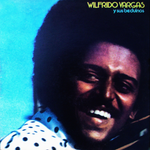
1974 · album · 12 tracks
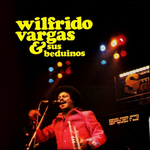
1976 · album · 10 tracks
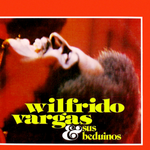
1976 · album · 10 tracks
1976 · album · 10 tracks