Licuado Vol. 2 - Caña y Algodón (Cane and Cotton)
1997 · Album · 8 tracks
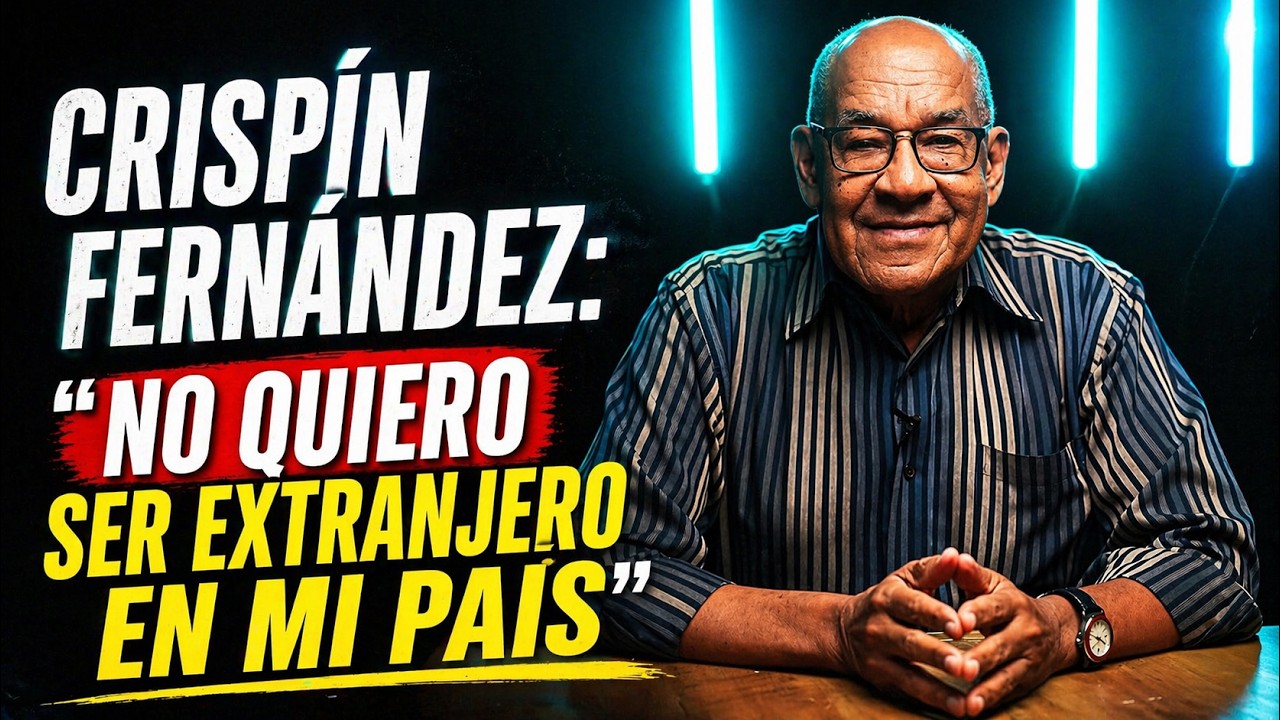
Crispín Fernández, born Crispín Fernández Minaya in Villa Vásquez, is a Dominican saxophonist, flautist, bandleader and teacher. He played on a large share of the merengue recorded in the two decades either side of 1990, most often without a credit on the sleeve.
The jaleo
A jaleo is the saxophone figure that runs under a merengue — the fast, repeating, interlocking line that makes the rhythm move. It sounds like the easiest thing in the music and it is one of the hardest to record: it has to be clean at speed, exactly in time, and it has to swing, and a fraction out in any of those three and the whole track sags.
He is the man other saxophonists were told to sound like. Producers of that era would turn down a player who could not do it his way. Among Dominican musicians the phrase for him is the king of the jaleo, and it is not a promotional line — it comes from other saxophonists.
The lineage he belongs to is small. Félix del Rosario led a band and Tavito Vásquez was the great soloist; Sócrates de León is the other name always in the list. Crispín is the one who defined how the instrument sounds on a record rather than on a stage.
Learning it
He started at eight at the music academy in his own town and moved to the capital at fifteen. He was an attached musician of the National Police band, and it was there that Tavito Vásquez took him on — the mentorship that every account of him begins with.
New York came later, and he treated it as school. He studied flute with a Russian teacher, and harmony and saxophone technique with Mario Rivera, the Dominican who had gone furthest into jazz. He worked around Mario Bauzá and Tito Puente, which is where a Caribbean horn player of that generation learned what a big band actually demands.
Between 1980 and 1982 he played flute and piccolo in the Orquesta Sinfónica Nacional. A merengue session player holding a symphony chair is not a normal career, and it explains the thing musicians always mention first about him, which is the tone.
The studio years
When merengue turned romantic and the studios filled up, he became the fastest reliable way to get a horn line on tape. He played on early records by Juan Luis Guerra 4.40, Alex Bueno, Sergio Vargas and Ramón Orlando. He had already worked with Johnny Ventura, with Conjunto Quisqueya and with Primitivo Santos y su Orquesta, and later with Pochy y su Cocoband.
Juan Colón — a saxophonist who wrote the standard method on the jaleo — estimates that Crispín is responsible for eighty per cent of all the merengue recorded between 1981 and 2002. It is one expert’s figure and impossible to audit, and nobody in the business disputes the order of magnitude.
Raising the rate
The part of this that belongs in a record of Dominican music has nothing to do with how he plays. He pushed, alone, for what a session was worth. He was thrown out of studios over it more than once, and each time they came back for him, because there was nobody else who could do the work at that standard.
He got the price up. Other musicians then asked for the same, and got it. A recording session is a wage, the wage was set by whoever would take it, and one player refusing to take it moved the floor for everybody who came after.
Writing it down
The jaleo was an oral form: you learned it from records and from the man next to you. He wrote three method books — Jaleos de Merengue, Melodías de Merengue and Jaleos Típicos del Merengue Dominicano — which put it on paper for instruments in different keys, so a student anywhere can work at it without a Dominican in the room.
He has taught at the Conservatorio Nacional de Música and directed its department of folk and popular music, taught in New York and in Santiago, and run instrument workshops around the country.
Licuado
His own group is called Licuado — blended — and it does what the name says with merengue, jazz and the classical technique. Three volumes exist, and the third includes a tribute to Antony Santos recorded twice, once as a bachata and once as a son montuno, which is a fairly precise statement of what the group is for.
He is a founding member of the Santo Domingo Jazz Big Band and still plays the festivals. Sixty years in, he is one of the few Dominican musicians whose reputation rests entirely on what other musicians say about him.
Interviews, conversations, and archival media connected to this artist.

April 23, 2026


February 27, 2024
1997 · Album · 8 tracks
1997 · Album · 9 tracks