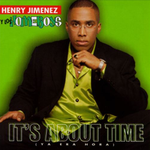
It's About Time (Ya era hora)
1997 · Album · 10 tracks
Henry Jiménez is a Dominican pianist, arranger, composer and record producer. He works from New York and his name sits in the small print of a great many merengue records that other people are remembered for.
Learning the trade
He studied at Madison Park High School and won a scholarship to the Berklee College of Music in Boston, which is not the usual training for a merengue arranger and shows in the writing.
He joined Pochy y su Cocoband as pianist in 1990 and arranged El Mujerón and El Boche on Llegaron los Cocotuces. The year after that he arranged La Morenita for Los Toros Band — Héctor Acosta’s first hit — and Pum Pum for Lisa M. Traigo la Bomba, for Vico C and Toño Rosario, came next, and with it the first alliance with Sony.
The Milly years
In 1995 he produced and arranged En Tus Manos for Milly Quezada. The record carried Entre Tu Cuerpo y el Mío, better known as Solo Contigo, and it put her back at the top.
Hasta Siempre followed in 1997, and he was musical director for the concert of the same name at the Hotel Jaragua. It had been announced as her farewell. The album and the night went so well that she did not retire.
He kept working with her through Vive, the twentieth-anniversary set and the compilations, and in 2006 two Latin Grammys came out of MQ — one as arranger, one as engineer, which is an unusual pair to hold on the same record.
Mambo Studio
He opened his own room in Manhattan in 2000 and the same year won a Grammy as producer of Olga Tañón’s Olga Viva, Viva Olga. Manny Manuel’s Lleno de Vida, the year before, had already been nominated for a Latin Grammy.
The label work of that period ran through Sony, BMG and Capitol, on records for Jessica Cristina, Jaileen Cintrón, Gisselle, Merenbooty Girls and Melina León. He also spent a decade producing advertising music in New York for companies whose names have nothing to do with merengue, which is how a working arranger pays for the studio.
Directing the room
He was musical director of Johnny Ventura’s SOY at the Teatro Nacional, and later produced Volvió la Navidad for him. He arranged Resistiré for Toño Rosario, which reached the tropical chart. He produced Un Hombre Nuevo for Fernando Villalona, which took Merengue del Año at the Casandras.
Then came the run with Miriam Cruz: Es Cosa de Él, which held the Dominican radio charts for half a year, then Es Necesario, written by Johnny Ventura, and La Carnada, written by Ramón Orlando, which won Merengue del Año at the Soberanos.
At Radio City Music Hall in 2016 he directed a night built on nineties merengue, with Milly Quezada, Wilfrido Vargas, Jossie Esteban, Kinito Méndez, Pochy Familia, Sergio Vargas, Oro Sólido, Mala Fe and both of his own groups on the same stage.
His own bands, and the long project
He launched Los Homeboys in 1994, and the group became a fixture of the New York merengue circuit. Divas by Jiménez, an all-female merengue group, followed in 2014, and for three years it was the face of a Dominican public campaign against violence towards women. In 2017 he produced a tribute to the women of merengue, ending a night at the Estadio Olímpico with an homage to Belkis Concepción.
Esto Es Merengue is the project he has been assembling for fourteen years: an album, a concert tour and a documentary, with a hundred and twenty-eight artists and seventy-five musicians. The first single, Dominicano Alza la Mano, was launched with a flashmob in January 2022 and gathers Milly Quezada, Johnny Ventura, Miriam Cruz, Fernando Villalona, Wilfrido Vargas and Eddy Herrera on one recording. Vol. 1 of the album arrived in 2023.
The stated purpose is preservation — to keep the genre teachable, and to get younger musicians to take it up. Coming from someone who has spent thirty years making the records rather than talking about them, it reads less like a slogan than like an inventory.
1997 · Album · 10 tracks
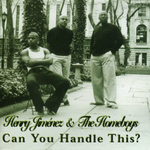
1998 · Album · 10 tracks

2022 · Single · 1 track