Canta: Qué será de mi (Condena)
1967 · Album · 10 tracks
José Manuel Calderón, born on 9 August 1941, is the Dominican singer, guitarist and composer who made the first bachata record. He was born in Las Charcas, in Azua, and raised in San Pedro de Macorís, his mother’s town, which is the place he has always identified with.
The thirtieth of May
On 30 May 1962, weeks after the fall of Trujillo, he recorded Condena and Borracho de Amor in the studios of Radiotelevisión Dominicana. Those two sides are where bachata begins as something recorded rather than merely played.
He was not alone in the room. He had formed Trío Los Juveniles with Andrés Rodríguez on first guitar and Luís Pimentel on second, and it is their playing on the record. Bienvenido Fabián wrote Qué Será de Mí, which he cut in the same period.
His mother, Hilda Fé Carbuccia, played guitar and sang, and she gave him his first one. His father was Luis María Calderón Peña.
What it actually sounded like
The music was closer to bolero than to the two-guitar bachata that came later. He sang in a rich baritone, nearer to Pedro Infante than to the high, breaking tenor most bachateros would use, and his arrangements carried strings, horns and piano.
One thing in it was entirely his own and entirely Dominican: he marked time with the güira rather than the maracas, and he did so from the very first session. That single substitution is one of the things that separates bachata from the Cuban and Mexican bolero it grew out of.
Because it was heard as bolero, it carried none of the shame that would later attach to the genre. The public and his fellow musicians received it as respectable music, which is a position no bachatero after him would occupy for thirty years.
The years of the classics
In the twelve months after that first session he released four singles that became permanent: Quema Esas Cartas, Lágrimas de Sangre, Serpiente Humana and Llanto a la Luna. By his own account, forty-two consecutive singles followed and every one of them was a hit.
In 1966 he recorded Por Seguirte backed by Johnny Ventura’s orchestra. The Puerto Rican bolero singer Felipe Rodríguez took up Llanto a la Luna and pushed it, and the two became lifelong friends; their voices were close enough that the association made sense to everybody.
The Cuban producer Mateo San Martín signed him to Kubaney after watching him work in Puerto Rico and at home, and he made five records for the label. Working before bachata was cast out, he had access to international labels that no bachatero of the next generation would get.
New York, twice
In 1967 he went to New York to record for BMC and stayed, taking his lead guitarist Andrés Rodríguez with him. For five years he worked a scene built around Puerto Rican boleristas — Felipe Rodríguez, Blanca Iris Villafañe, Tommy Figueroa, Odilio González — playing the Teatro Riopiedras, the Teatro Jefferson and the Teatro Puerto Rico.
He came home in 1972 to a country that had changed its mind about his music. Bachata had been pushed to the margins, tied in the public imagination to poverty and the brothel, and one station in the whole country played it: Radio Guarachita.
He was reclassified along with everybody else, and his songs moved with the genre — La Saqué de la Barra and Bebiendo en la Barra tell the story of the bar and the barrio the way his contemporaries’ did. They sold, but they never became what the early records had been.
So he went back to New York, and watched a Dominican community take shape in Washington Heights and grow a bachata scene of its own. Where he had once played to Puerto Ricans beside Odilio González, he now played El Internacional to Dominicans.
What the record shows
More than sixty productions carry his name, and he still records and distributes them himself. Payasó came in 2017. Víctor Víctor and Wilfrido Vargas have both recorded his songs.
The Casandra al Mérito came in 2009. In 2019 the Chamber of Deputies named him an ambassador of bachata, and an authorised biography of him was published the same year. In March 2024 he was set into the Bulevar de las Estrellas alongside Luis Segura and Leonardo Paniagua.
The argument over who fathered bachata will not end, and it should not: Luis Segura shaped how it is sung, Edilio Paredes shaped how it is played, and Cuco Valoy carried it as promoter, broadcaster and artist at once. But the question of who recorded the first one is not an argument. It was him, and the date is 30 May 1962.
1967 · Album · 10 tracks
1995 · Album · 20 tracks
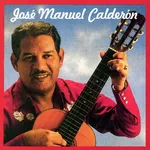
2006 · Album · 10 tracks
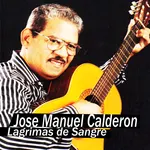
2018 · Album · 21 tracks
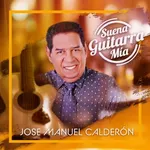
2023 · Album · 16 tracks
1962 · Single · 2 tracks
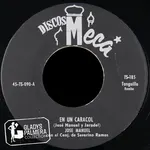
1965 · Single · 2 tracks