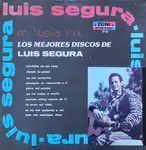
En Nueva York
1971 · Album · 10 tracks
Luis Gonzaga Segura, who records as Luis Segura, is a Dominican bachata singer, composer and guitarist from Mao. He recorded without interruption from 1964 until his retirement in 2023, an unbroken run of nearly sixty years that no other performer in the genre has matched, and he is known across the country as El Papá de la Bachata.
The guitars he built
He was born on 21 June 1939 in Mao, in the province of Valverde, in the north-west of the country. From the age of eight he lived in a rural part of the municipality, where he made guitars out of whatever materials came to hand and played them walking through the streets; the constant noise earned him the nickname Guirí Guirí. He also learned güira, tambora, maracas and several stringed instruments.
At twelve he moved to Santo Domingo and began entering music festivals and radio competitions, where he was noticed as an instrumentalist as much as a singer and where he leaned particularly on the requinto.
Cariñito de mi vida
Cariñito de mi vida, released in 1964, made his name at home. Audiences gave him a second nickname, El Añoñaito, for the melancholy his delivery produced, and it stayed with him for the rest of his career. Bachata had almost no radio in that decade, and the following he assembled was built without it.
Other performers took up his songs early. José Manuel Calderón recorded Cariñito de mi vida as a ranchera and later cut Me siento conmovido and Agonía. In 1966 Radhamés Aracena brought him into Radio Guarachita, the station he ran for bachata and guitar music, and from that point the records had somewhere to be heard.
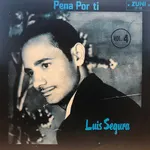
Pena por ti
He wrote Pena por ti in 1981 and released it the following year. It is the song by which the genre is identified, and he has called it his anthem.
Part of what made it matter is where it was played. It was among the first bachatas to reach FM stations, at a time when the music was confined to AM and to rural audiences, and it crossed the class barrier that had kept the genre off urban Dominican radio. Its success also helped settle the word bachata as the name of the music, in place of música de amargue, the term under which the press had filed it.
The aula magna
In 1983 the university employees’ association ASODEMU invited him to perform at the Universidad Autónoma de Santo Domingo. The rector, José Joaquín Bidó Medina, objected that the music had no place in the university’s cultural programme, and on 15 July of that year he circulated a demand to the university authorities that such performances cease, on the grounds that they encouraged base sexual passions. The performance in the aula magna went ahead.
Institutional acceptance arrived later. In 1997, during the presidency of Leonel Fernández, he became the first bachata performer to appear at the National Palace.
A heritage declaration
On 11 December 2019 Unesco inscribed bachata on its list of the intangible cultural heritage of humanity. At the ceremony in Bogotá, Pena por ti was sung by José Antonio Rodríguez, then the Dominican ambassador to Unesco, together with the singer-songwriter Vicente García.
Two years later to the day, 489 couples danced to the same song simultaneously on the avenida George Washington in Santo Domingo, taking the Guinness world record for the largest bachata dance. The music was played live by Joe Veras, Alexandra Queen, Kiko Rodríguez, Daniel Santacruz and Segura himself.
Forty duets
On 30 October 2020 he released El Papá de la Bachata, su legado, forty of his own compositions re-recorded as duets with forty other artists and issued in four volumes titled Añoñado I to IV. The guest list crosses genres and generations: Antony Santos, Johnny Ventura, Fefita la Grande, Leonardo Paniagua, Cuco Valoy and El Chaval de la Bachata are on it, along with Romeo Santos, the Puerto Rican Danny Rivera and the Colombian Charlie Zaa.
The album was nominated for best merengue or bachata album at the twenty-second Latin Grammy Awards in 2021. At its launch the Senate of the Dominican Republic handed him a resolution naming him the father of bachata.
Fin de la historia
He announced his retirement in 2023 and closed the career with a concert of that name at the Gran Arena del Cibao in Santiago. Behind him were some thirty productions and more than five hundred songs of his own writing.
The municipality of Mao named a street after him in November 2008. ACROARTE gave him the Casandra al Mérito in 2010, and at the thirty-eighth Premios Soberano, in March 2023, the same body gave him El Gran Soberano, the highest distinction a Dominican artist receives at home. Antony Santos had received it four years earlier.
The authorship of Pena por ti
Segura brought a civil claim against Bonny Cepeda before the eighth civil and commercial chamber of the National District, alleging that Cepeda had improperly taken the authors’ rights to Pena por ti and altered the composition without permission, and seeking damages. Cepeda answered in public that he had never claimed the authorship, that he had always understood the song to belong to Segura, and that the notification wrongly named him as its author. The matter was still before the courts in 2026.
1971 · Album · 10 tracks
1979 · Album · 12 tracks
1989 · Album · 20 tracks
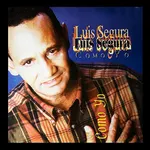
1994 · Album · 10 tracks
1998 · Album · 25 tracks
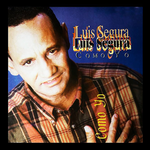
1999 · Album · 20 tracks
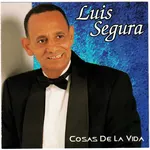
2002 · Album · 10 tracks
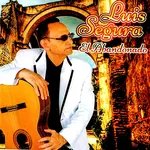
2014 · Album · 12 tracks
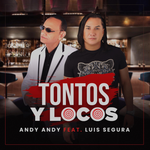
2019 · Single · 1 track