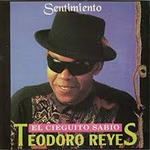
Sentimiento
1994 · Album · 10 tracks
Teodoro Reyes — born blind in Nagua on 27 March 1954 and known as El Cieguito Sabio — is a Dominican bachata singer and songwriter. He wrote «La hamaquita» and other early-1980s hits for Fernando Villalona, spent years singing on the beach at Boca Chica, and in 1994 became the first winner of the Bachatero del Año category at the «Premios Casandra», with the album that carried «Los pobres también aman» and «Vuelve con tu papá».
Nagua and the school for the blind
As a child in Nagua he played at neighbourhood parties on whatever he could find, making a tambora from an oil can and a güira from a tin. The music around him was merengue típico — Tatico Henríquez came from the same region — and típico remained his favourite. At twelve, against his family’s wishes, he left home to enrol at the «Escuela Nacional de Ciegos» in Santo Domingo, where he learned to read and write and stayed eight years, finishing secondary school. His classmates teased him that he had a bachatero’s voice.
He played tambora in the group of Félix Quintana, tried the accordion and found it too heavy, and at the end of the 1970s took up the guitar, which he still uses to compose.
Songs for Fernando Villalona
His first success came as a writer. Fernando Villalona recorded his «La hamaquita», «El masaje» and «El niño mimado»; Reyes has said that he was paid 600 pesos for the first two, and that the royalties only came later, once his name was known.
Boca Chica
His own first hit, «Lindas palabritas», came in the mid-1980s, but for years afterwards he made his living singing for visitors on the beach at Boca Chica. When the owner of a venue there told him the public was tired of hearing him and brought in Antony Santos instead, Reyes tried to get onto the same bill and failed; a week later he waited at the door of a club in Santo Domingo to meet Raulín Rodríguez, who walked past him. He has described those two rejections as what drove him to record an album of his own.
«Sentimiento»
That album, twelve songs of love, heartbreak and humour, set his bachata to livelier, faster arrangements than the genre usually had, and nearly every track was played. «Los pobres también aman», «Vuelve con tu papá», «Muriendo de amor» and «Amor bonito» made him one of the leading bachateros of the decade, and «ACROARTE» named him Bachatero del Año for 1994 — the first time the «Premios Casandra» gave that award, after years in which the ceremony had left bachateros out. Alongside Antony Santos, Raulín Rodríguez, Luis Vargas and Leonardo Paniagua, he was part of the generation that carried the music of amargue into the mainstream.
Abroad and in duet
His songs have taken him to the United States, Venezuela, Panama, Spain, Italy, Switzerland and Austria; in 2017 he returned from a European tour of more than thirty dates. In 2019 Romeo Santos invited him to sing «Ileso» on «Utopía», an album of duets with bachateros of the previous generation. In 2024 he announced «La chica de baile», twelve songs each named after a woman.
Legacy
Teodoro Reyes combined the confessional bachata of the 1990s with a humour and a tearful, playful voice of his own, and he is one of the few bachateros of his generation whose songs are still sung by listeners much younger than they are. His catalogue as a writer spans both merengue, through the hits he gave Fernando Villalona, and bachata, through his own.
1994 · Album · 10 tracks
1994 · Album · 10 tracks
1995 · Album · 18 tracks
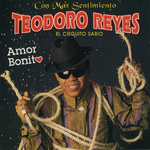
1998 · Album · 12 tracks
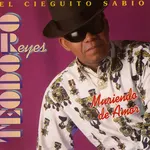
1998 · Album · 10 tracks
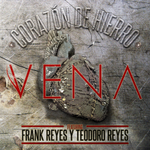
2015 · Single · 1 track