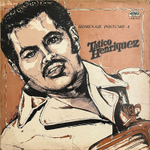
Homanaje postumo a Tatico Henríquez
1978 · Album · 0 tracks
Domingo García Henríquez, known everywhere as Tatico, was a Dominican accordionist and singer. He worked for barely a decade and left merengue típico permanently changed: the instrumentation the genre still uses is the one he assembled.
Mata Bonita
He was born in 1943 in Mata Bonita, a settlement outside Nagua on the northern coast, into a farming family. His father, the accordionist Juan Henríquez, put the instrument in his hands, and he went on to sharpen his technique under Ramón Mezquita. He first became known playing the religious festivals and processions of his district, where folk music was the working repertoire rather than a heritage exercise.
Trío Reynoso
In 1966 the Trío Reynoso lost its accordionist, Pedro Reynoso, and took Tatico on. He played his first date with them at the Teatro Agua y Luz in Santo Domingo. He did not stay long: he left to form a band of his own, Tatico y sus Muchachos, and it was there that he did the work he is remembered for.
The ensemble he rebuilt
The típico group of his day ran on diatonic accordion, güira, tambora, a marimba standing in for a bass, and now and then a saxophone. Tatico kept the accordion, the güira and the tambora and added congas, two saxophones harmonising with the accordion, and an electric bass in place of the marimba.
That line-up is what a típico band looks like today. The change is often described as modernisation, but it was closer to an argument: he made the folk ensemble loud and flexible enough to hold a dance floor without giving up the accordion at its centre.
Rescuing the genre
The journalist Huchi Lora and the writer Rafael Chaljub Mejía have both argued that merengue entered a crisis after the killing of Trujillo in 1961, deep enough to threaten the form itself, and that musicians like Tatico brought it back by taking the country merengue and moving it forward from inside its own rhythm rather than replacing it.
He recorded a great many típico merengues, his own and those of composers such as Ñico Lora, along with old traditional pieces like El Telefonema. He also made a record with his brother Isaías, on which he only sang while Isaías played the accordion. Merengues..! appeared in 1970 and was followed by two further volumes and by A Gozar Con Tatico in 1974; the recordings issued after his death kept appearing for another three decades.
What came after
He died in a road accident in Santiago on 23 May 1976, at thirty-two. The players who came up behind him carry his mark: Fefita la Grande, El Cieguito de Nagua, Rafaelito Román, Francisco Ulloa and Agapito Pascual were all named as his heirs, and Fernando Villalona recorded a song in his memory.
A bust of him was unveiled in 2001 in the park that carries his name, opposite the town hall in Nagua, and a documentary about him appeared five years later.
1978 · Album · 0 tracks
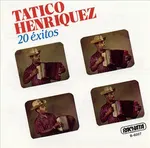
1989 · Album · 20 tracks
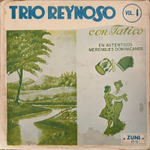
1995 · Album · 12 tracks
2002 · Album · 27 tracks