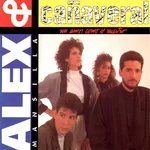
Un Amor Como El Nuestro
1989 · album · 8 tracks
Cañaveral was a Dominican merengue vocal group, billed as Alex Mansilla y el Grupo Cañaveral. It was not an orchestra: its only album presents it as a quartet — Alex, Amarilis, Agustín and Carolina — four childhood friends who had played in a rock band together before stepping into merengue at the end of the 1980s, led by the arranger Alex Mansilla. In 1989 the group released «Un Amor Como El Nuestro» and scored the hit that still defines it, «Ella Me Vivía».
A vocal group
The album's own liner notes describe a "grupo músico-vocal" blending the roots of Dominican folk music and merengue with touches of blues, jazz and rock, "above all in the singing". That is exactly how the record sounds: four voices over tight, polished arrangements, in the refined merengue mold that Juan Luis Guerra and Grupo 440 had made the era's standard — Dominican writers of the time read Cañaveral as the act launched to stand against him. Alex Mansilla, who had come up as a jingle producer, arranger and composer, led the group, produced the album and co-wrote its arrangements with pianist Juan Valdez Ybet; the record was cut at Audiolab in Santo Domingo and mixed by his brother Luis Mansilla.
«Ella Me Vivía»
The song was written by Luis "Terror" Días. Rubby Pérez recorded it first, on a Karen Records 45 (arranged by Manuel Tejada) that made no impact; the song was then passed to the new project, Alex Mansilla & Cañaveral, and there — in Discolai's words — it was "un éxito total". WEA worked it hard, in three separate single pressings, and it anchors side B of the album. The song kept living: in 2013 El Prodigio remade it as a merengue típico record, and its video was nominated for Video Clip of the Year at the 2014 Premios Soberano.
The album
«Un Amor Como El Nuestro» appeared in 1989 on Oi Records in the Dominican Republic and on WEA Latina internationally, in pressings that reached the United States, Spain and Central America. Its eight tracks mix Mansilla's own writing — «Isabel», the title track, «Sueño Con Ella», «Que Fue Lo Que Me Hiciste» — with Palmer Hernández's «Apechao», Giordano Di Marzo's «No Voy A Mover Un Dedo» and two songs by Luis "Terror" Días, «Ella Me Vivía» and «Emeteria».
The name that could not travel
There was no second Cañaveral album. By 1991 the same act was billed as Alex Mansilla & Su Grupo («Preso De Tus Besos», WEA), and by 1992 the records carried Alex Mansilla's name alone. Dominican accounts attribute the short life of the name to a collision: a Colombian Grupo Cañaveral already owned it abroad, which blocked the Dominican group's promotion outside the country, and the act was stronger on record than on stage. By 2018 the Dominican press was already calling it "el desaparecido grupo Cañaveral".
Legacy
Cañaveral's recorded life fits inside a single album cycle, but the record never disappeared: both of the act's albums stream today, filed under Alex Mansilla's name alone — the very confusion this page exists to undo. What survives is a quartet of old friends who crossed from rock into the most polished merengue of their moment, and the definitive hit version of a Luis "Terror" Días classic. For Alex Mansilla's own story — the arranger behind other artists' records, before and after Cañaveral — see his personal page.
Interviews, conversations, and archival media connected to this artist.


July 16, 2026
1989 · album · 8 tracks