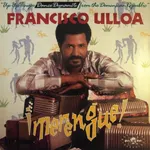
¡Merengue!
1987 · Album · 13 tracks
Francisco Ulloa is a Dominican accordionist, singer and bandleader, and one of the leading interpreters of merengue típico, the accordion-led country form of the Cibao also known as perico ripiao. He was born in Altamira, Puerto Plata, began recording in 1970, and reached his largest audience in 1994 playing on Fogaraté, the album by Juan Luis Guerra 4.40. He lives in Santiago and continues to perform.
Altamira and the 1970s
Ulloa was born in a village near Quita Sueño, in the Altamira district of Puerto Plata. He turned professional in the 1970s, at roughly the same time as Tatico Henríquez, the accordionist widely regarded as the founder of modern merengue típico. That cohort moved a music which had belonged to rural festivities into recording studios and onto the radio. His first record, El Baby Vol. 1, appeared in 1970.
The Conjunto San Rafael years
Ulloa recorded steadily from the late 1970s: La Chiflera, Ahora vengo más fuerte and Divina qué linda eres all in 1979, La Tijera in 1980, and in 1981 two records with the Conjunto San Rafael, one of them presented by Eladio Romero Santos. He settled his debt to his predecessor with Homenaje al Gran Tatico Henríquez in 1983.
The run continued through ¡Merengue! (1987), ¿Qué? ¡Aha! La mujer de Antonio (1988), ...Y los mosquitos pullan (1989), En New York and El Chucuchá (both 1990), ¡Ultramerengue! and Voy pa’ llá (1992), Pa’ mi campo (1993), Pegaito (1995), Mejor que nunca (1999), Yo quiero alegría (2000), ¡Qué vaina! (2002) and El Paquetón (2003).
Fogaraté
In 1994 Juan Luis Guerra released Fogaraté, and on two of its típico tracks he brought Ulloa in as collaborator and as the hand behind the accordion writing. "La Cosquillita" was the lead single that June: Guerra wrote and produced it with Ulloa and his band, Spanish-language accounts credit the music to the accordionist, and it reached the Latin Airplay top twenty in Spain, the Dominican Republic, Puerto Rico, Venezuela and the United States, taking a BMI Latin Award in 1996. "El Farolito", the album’s eighth track, went to number one in the Dominican Republic. Guerra said he had set out to do for perico ripiao what he had already done for bachata. Fogaraté was nominated for the Grammy for Best Traditional Tropical Latin Album.
Style
Ulloa plays the diatonic button accordion, and his reputation rests on speed and improvisation — spontaneous variation rather than fixed arrangement. Writers place him in the older, more rustic wing of the tradition, closer to Fefita la Grande and Agapito Pascual than to the jazz-inflected playing of younger accordionists such as El Prodigio. Surveys of the style list him beside Tatico Henríquez, Pedro Reynoso, El Ciego de Nagua, Francisco Peralta and Rafaelito Román.
Legacy
Ulloa is one of the accordionists who carried merengue típico from provincial dance floors to concert halls abroad, and the one whose playing reached the widest audience, through Fogaraté. He continues to perform at home and abroad, and in 2025 released Merengue Típico with Eladio Romero Santos.
1987 · Album · 13 tracks
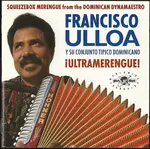
1993 · Album · 14 tracks