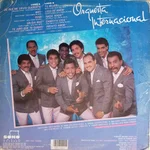
Orquesta Internacional
1986 · album · 10 tracks
Ramón Orlando Valoy (born 29 July 1959) is a Dominican musician, arranger, composer, producer, and orchestra director, widely regarded as one of the most technically accomplished figures in modern merengue. His work spans more than four decades and is distinguished by sophisticated harmonic language, intricate brass writing, and a pivotal role in elevating the professional standards of Dominican orchestral music. In addition to his contributions to merengue, he has developed an extensive catalog of Christian music and has been active as a pastor and musical educator.
Early Life and Musical Formation
Ramón Orlando was born in Santo Domingo into one of the Dominican Republic’s most musically influential families. He is the son of Cuco Valoy, a prominent bandleader whose ensembles — including Los Ahijados and La Tribu — played a central role in the development of Dominican son, salsa, and merengue. Growing up in this environment exposed Ramón Orlando to the discipline of rehearsals, the structure of tropical orchestras, and the practical demands of professional musicianship.
His musical training included piano, theory, harmony, and orchestration. Although much of his early learning occurred informally within his father’s ensembles, he later pursued formal studies that strengthened his command of jazz‑influenced harmony and complex arrangement techniques. This combination of practical experience and academic grounding became a defining feature of his later work.
Professional Beginnings
Ramón Orlando began his career performing with his father’s groups during the 1970s and early 1980s. As pianist, arranger, and musical director of La Tribu, he contributed to a sound that blended merengue, salsa, and Afro‑Caribbean influences. His arrangements during this period displayed a growing interest in dense harmonic textures, counterpoint in the brass section, and rhythmic ideas drawn from jazz and Caribbean dance traditions.
His work with La Tribu established him as a rising arranger and prepared him to lead his own projects.
La Orquesta Internacional and Artistic Consolidation
In the late 1980s, Ramón Orlando founded La Orquesta Internacional, a group that became one of the most influential merengue ensembles of its era. The orchestra’s sound was characterized by:
harmonically rich arrangements,
prominent use of piano as both rhythmic and melodic anchor,
tightly coordinated brass lines,
integration of jazz‑derived voicings,
and a polished orchestral aesthetic uncommon in merengue at the time.
The ensemble produced numerous hits interpreted by vocalists such as Henry García, Peter Cruz, Nino Segarra, and others who passed through the orchestra. Ramón Orlando’s work as arranger during this period set new standards for complexity and precision in merengue production.
Arranger and Producer
Beyond his role as bandleader, Ramón Orlando became one of the most sought‑after arrangers in Dominican and Caribbean music. His style is noted for:
contrapuntal brass writing,
extended harmonies influenced by jazz,
formal structures more elaborate than those of traditional merengue,
and a technical approach that emphasized clarity, balance, and orchestral discipline.
He collaborated with numerous artists across the tropical music spectrum, contributing to the modernization of merengue and reinforcing its capacity for musical sophistication without sacrificing danceability.
Transition to Christian Music
Beginning in the 1990s, Ramón Orlando underwent a spiritual transformation that led him to devote significant attention to Christian music and pastoral work. His religious compositions include hymns, ballads, and tropical fusions with devotional themes, often marked by the same harmonic refinement present in his secular catalog.
His Christian repertoire has been influential within Dominican congregations and has maintained visibility in broader musical contexts, reflecting his ability to bridge sacred and popular forms.
Musical Style and Influences
Ramón Orlando’s musical style blends traditional merengue with elements of jazz, classical harmony, and Afro‑Caribbean rhythmic structures. Key features of his approach include:
the piano as a central organizing instrument,
dense and carefully structured arrangements,
frequent modulations and extended harmonic progressions,
and a technical orientation that prioritizes precision and orchestral cohesion.
His upbringing within Cuco Valoy’s musical environment and his experience in tropical ensembles shaped his view of merengue as a genre capable of supporting complex formal development while retaining its energetic, dance‑driven character.
Legacy
Ramón Orlando is regarded as one of the most complete musicians in modern merengue. His influence extends to:
the professionalization of orchestral arrangement in Dominican music,
the training of singers and instrumentalists within his ensembles,
the expansion of merengue into more harmonically and structurally ambitious forms,
and the integration of Christian music into his broader artistic output.
His work occupies a central place in the history of Dominican popular music and continues to serve as a reference point for musicians, producers, and scholars of Caribbean musical traditions.
Interviews, conversations, and archival media connected to this artist.


January 17, 2026
1986 · album · 10 tracks
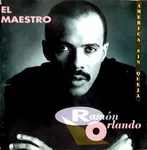
1993 · Album · 16 tracks
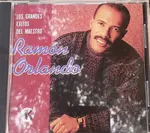
1993 · Album · 10 tracks
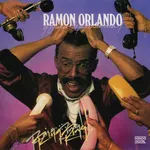
2002 · Album · 10 tracks
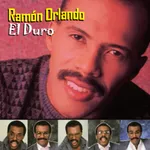
2007 · album · 14 tracks
2009 · Album · 20 tracks
2021 · Album · 10 tracks
2024 · album · 9 tracks
2024 · Single · 1 track